
Occupational Health Disparities
“Nail salon workers are emblematic of low-wage, immigrant women in the service industry who are largely invisible to the communities they service.” – Dr. Le
Occupational Health Disparities are found in nail salons, custodial, food service, and solid waste workers just to name a few. Dr. Aurora Le conducts research on occupational safety and health interventions for these workers, with studies focused on perceived stressors, health issues and perceived interventions.
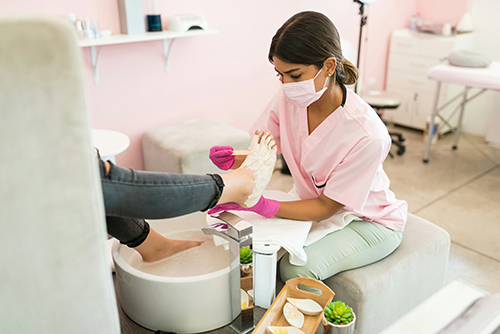 In her study of Michigan nail salons, she found over half had disciplinary actions for unlicensed and illegal activity, putting the workers and customers as risk.
Nail salons are a multi-billion-dollar industry employing 126,000 to 212,000 workers, mostly immigrant women of southwest Asian descent. Workers are exposed to toxic chemicals and ergonomic hazards as well as infective agents, and salon work has been linked to respiratory, dermal, endocrine, and reproductive problems. 1
While in Michigan Le formed a community based participatory research plan that put researchers working alongside the nail salon owners and workers. The group created educational materials and assessed the effectiveness of the materials for the population with the goal of promoting the health and safety of the worker.
Dr. Le also researches worker health and safety for those employed in solid waste removal as well as people who manage human remains. Nearly half a million workers are classified as “Waste Management and Remediation” workers by the U.S. Bureau of Labor Statistics. Waste workers have higher injury and illness rates compared to workers across all private industries with total recordable case rates of 3.1 vs. 2.7 per 100 full-time workers, respectively. 2
Workers in both waste management and decedent remains come in contact with sharps, feces, bodily fluids, and blood borne pathogens. Dr. Le researches best practices training techniques that help workers conduct their jobs safely to avoid becoming sick with infectious diseases.
By unveiling these disparities and advocating for proactive measures in these important but often overlooked occupations, Dr. Le’s work sheds light on these issues to help ensure the well-being of these often overlooked and vulnerable occupational groups.
For more information on Occupational Health Disparities Research, contact Dr. Aurora Le at able@tamu.edu